Let’s set the stage. Ten hours of what should be sleep. Four hours collectively slept, the longest continuous stretch being thirty minutes. Three nervous pee breaks. Seventy-five ish iterations of, “What was that? Did you hear that? Was that your stomach again?” Eight wide-eyed stares thinking something was moving outside the tent. Five attempts to roll over only to find the two sleeping pads on top of each other as far from the tent walls as possible. Four instances of naughty coyotes howling in the (not so) distance. (And a partridge in a pear tree).
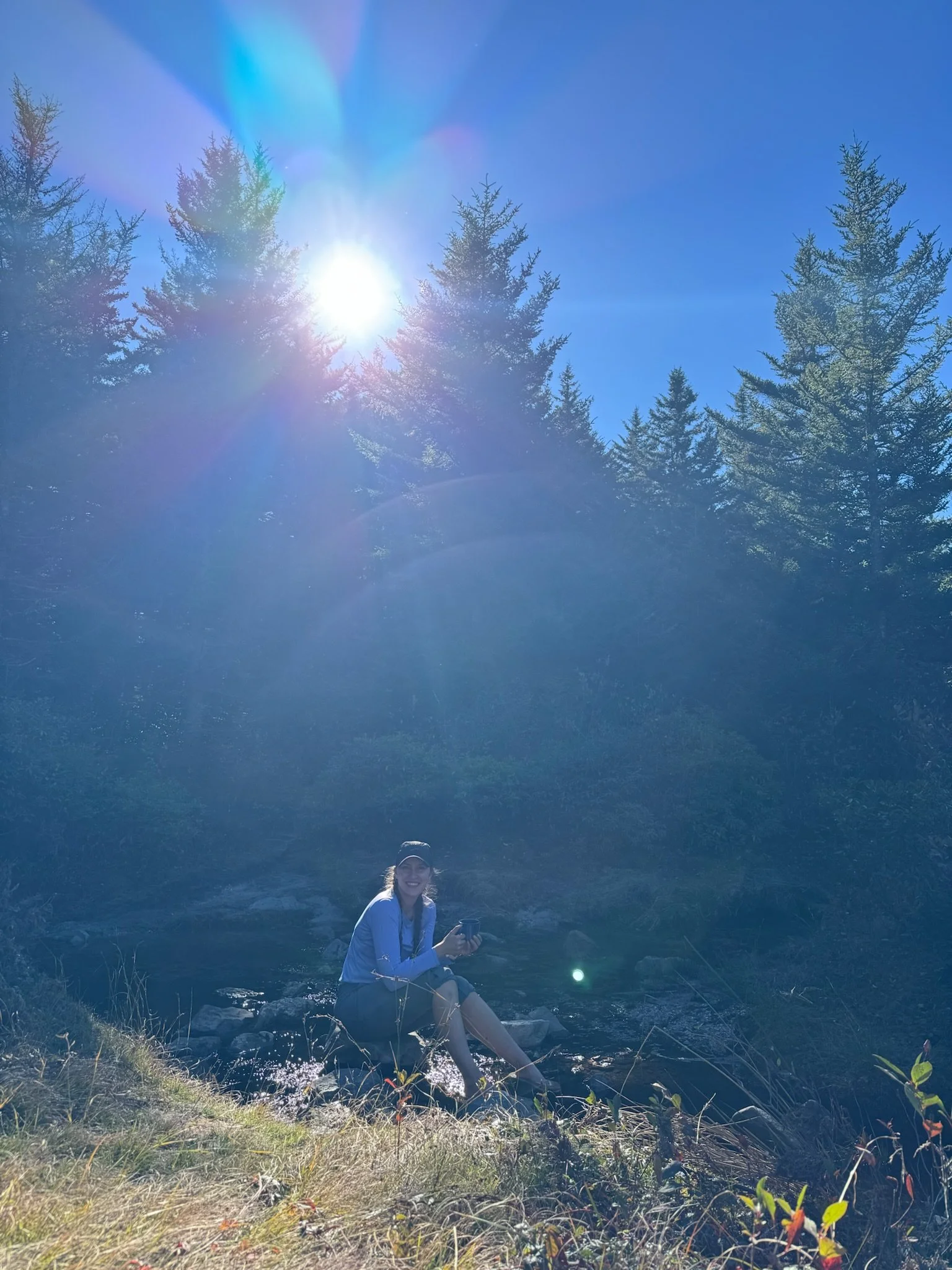
If you guessed this was the scene from a recent backpacking trip, you’d be right. What else can sound so entirely unpleasant and yet be something we go back for again and again?
I’m writing this blog with the full support and approval of the friend I am describing, a friend who generously agreed to strap on a backpack, head to the woods with me, and come see what it is that I’ve been talking about loving for the past three years. Now this friend is no stranger to hard work—she’s training for a marathon after all. Plus, she’s too stubborn to let a little something like a mountain stand in her way. But, no matter the athlete, no matter the can-do attitude, nights when you’re alone in the woods just hit different.
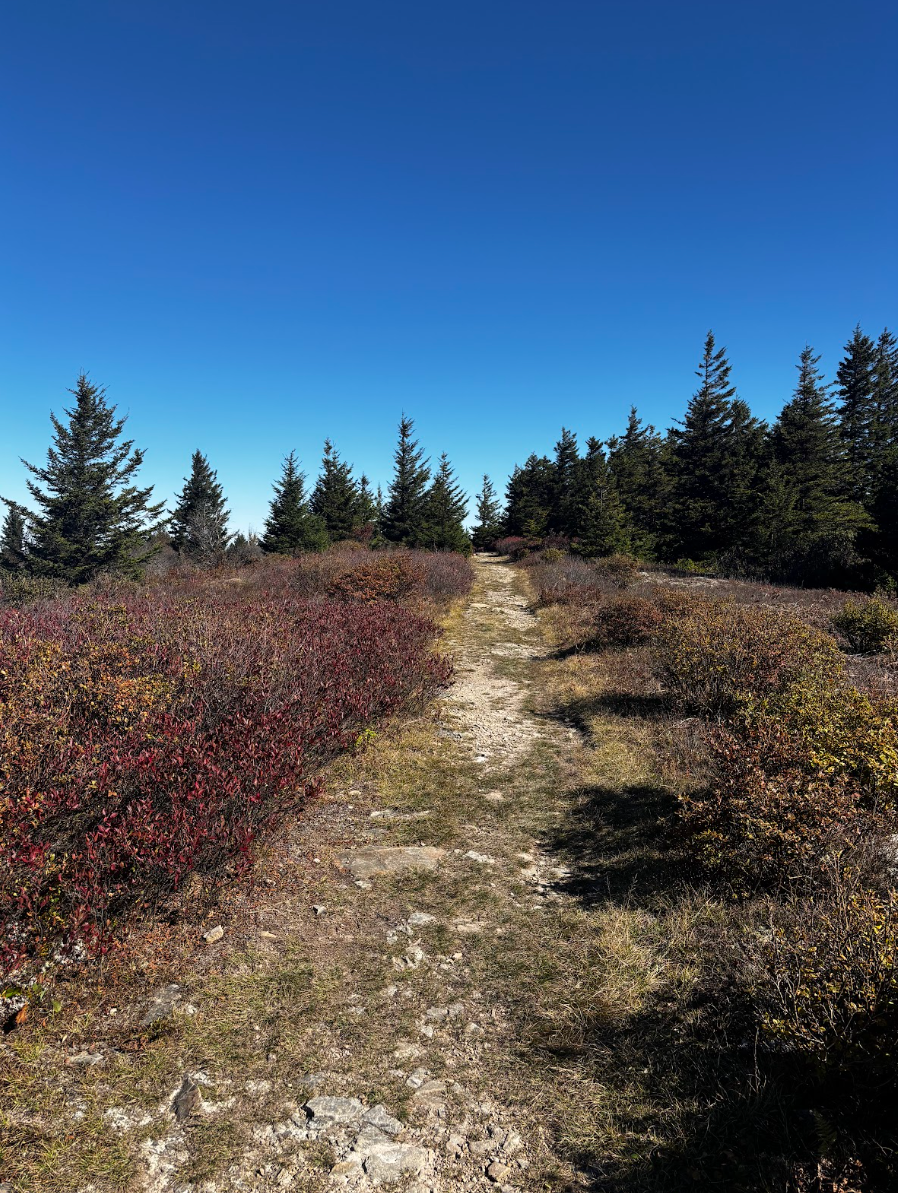
You think of calm, peaceful evenings with the sound of a creek in the background. You think of cozying up in your sleeping bag and letting your physical exhaustion from the day lull you into a peaceful sleep, the hoot of owls and the croak of bullfrogs morphing into a lullaby. You imagine waking the next morning to a little campfire before watching the sunlight dance across the stream as you get ready to hike back out. You fill your head with these fantasies each and every time (even when you know better) because how else are you getting back out into the woods? How else are you overcoming the often different reality?
That reality looks a lot more like the first scene described above. You do everything in your power to set your night up for success. You pack safety measures. You pick a good campsite. You have a fully charged headlamp easily accessible. You make sure someone back home knows where you are, when they should expect to hear from you, and what to do if they don’t. You stand outside your tent before getting in, listening to the sounds of the woods so that when you inevitably hear a twig snap in the night, your mind first goes to a playful squirrel rather than a dire wolf. You get into your tent before dark, play an audiobook or a silly rom-com. And you drift off to sleep only to be awoken approximately twenty-five minutes later by something (you don’t know what). Then you play the guessing game: “What was that? Is it trying to eat me? Am I okay? I’m not okay, right? No wait, I am okay. Okay back to sleep. Crap I can’t sleep.” And then this cycle repeats for the rest of the night until you finally fall asleep as it begins to brighten outside, sleep until your alarm goes off, and then ponder every decision you’ve ever made.
But as you step outside in the morning, your mood changes. You survived! You thrived (well, kind of, but you made it!)! You’re looking out on a glorious campsite that you assembled by yourself. You grab the wood that you collected and chopped to size and start a fire with flint and steel. You drink your crappy instant coffee, ponder if you can make it back to the trailhead before nature calls, and then load your backpack up. That first moment when you crest a hill and see the morning light pouring over the landscape takes your breath away: you know you’ll do it all again.
But why do you do it again? You do it again because you love it. You do it again because the feelings of self-sufficiency, of physical reward, of mental resilience are enough to help your brain forget the middle-of-the-night panic. You do it again because you hope that each time it gets easier. That each time, you’ll master your thoughts a little more, and you’ll get better at realizing that your mind is the most likely thing to betray you when you’re out alone. It’s a challenge. It’s a hard one. It’s something that takes uncomfortable practice. But as I laid there with my friend, doing my absolute best not to laugh as I calmly explained how very unlikely it was that a pack of thirty rabid coyotes would appear in the dark and simultaneously lunge at our tent, I realized it does get better. It does get easier. You learn to push through that discomfort, harness the power of deep-breathing, convince yourself that you will be okay. And are there things that still scare me today? Absolutely. Will they always exist in my mind? Based on how I’m wired, I think yes, probably. But am I going to let those things stop me? Absolutely not. I’m going to look forward to that first moment unzipping my tent.